The short version
- , Tracked mud in a public street is the single most common complaint that brings an inspector out.
- , Post the permit where it is visible from the street for the entire duration of work.
- , One neighbor complaint on a Saturday morning can cost you a week of schedule.
How a shutdown actually starts
It almost never starts with an inspector driving by and finding a code violation. It starts with a phone call. A neighbor, a passing council member, a property manager for a rental two doors down. Somebody photographs a mud trail on Kearns or a silt fence lying flat and sends it in. Then the inspector comes out, and now they are looking at everything, not just the thing that was reported.
Construction impact mitigation is written into Summit County's engineering standards for a reason. Up here the community's tolerance for construction impact is thin, and enforcement follows public patience.
Do these, every day
- Keep the permit posted and visible from the adjacent street while work is underway.
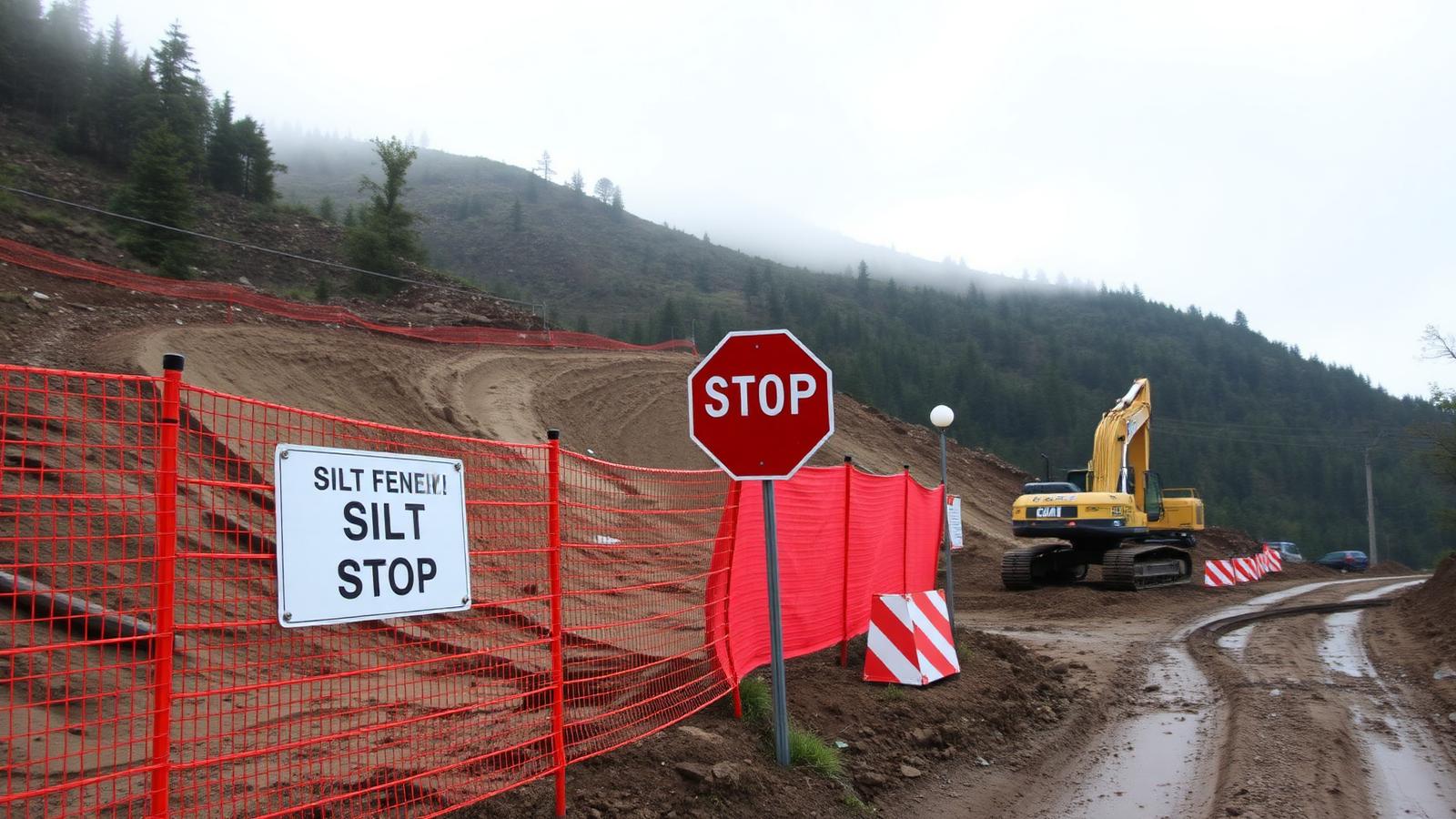
- Install erosion control before you disturb ground, and repair it the same day it fails.
- Maintain a real tracking pad, clean rock, deep enough, replaced when it plugs with fines.
- Sweep the dirt when it hits the ground, not just at the end of the day. A street that never gets dirty never gets complained about.
- Respect posted work hours. Early starts are what generate complaints in residential neighborhoods.
- Call Blue Stakes and honor the marks, 811, and re-mark when the flags age out.
Do not do these, ever
- Do not stockpile spoil in the right-of-way or block a public road without an encroachment permit.
- Do not alter or obstruct a drainage course because it is in the way. That one escalates fast.
- Do not let a dust plume run in a wind event without water on it.
- Do not start clearing before your silt fence and inlet protection are installed.
- Do not bury debris, stumps or demo material as fill. It will be found, and it will be dug back up.
- Do not discharge dewatering pump water into a storm inlet untreated.
The paperwork multiplier
The lost days are only the first cost. A shutdown usually comes with a corrective action requirement, a re-inspection, sometimes a revised plan submittal, and occasionally an increased bond. On a project with a framing crew scheduled and a concrete pour booked, three days of paperwork turns into three weeks of schedule.
The whole prevention program costs less than one shutdown: a broom, a load of clean tracking rock, and a crew that treats the street like it belongs to somebody who lives there. Because it does.
Want this handled instead of managed?
We do this work every week in Park City and 25 miles around. Call and we’ll tell you straight what your site needs.