The short version
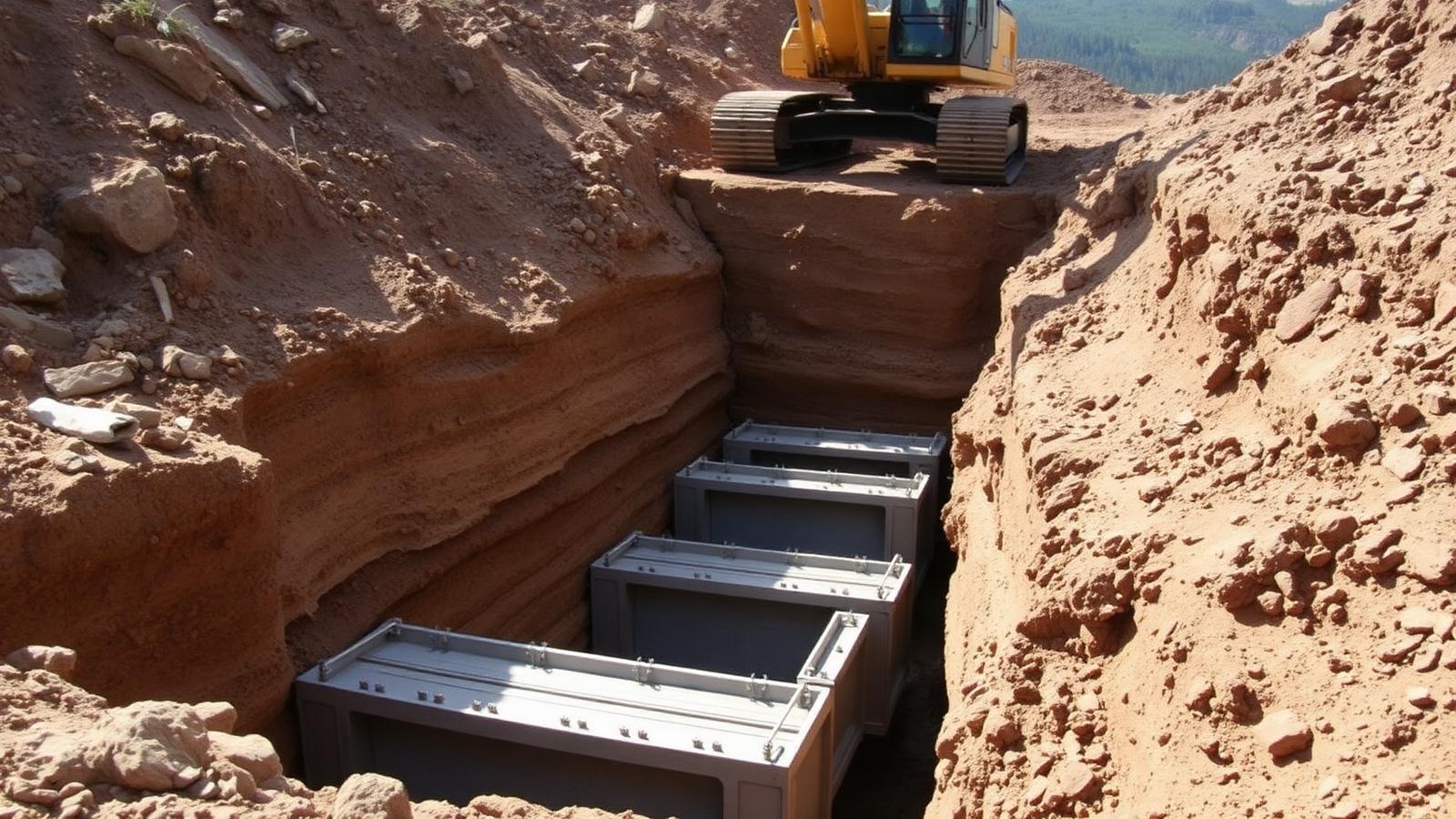
- , Five feet deep is the line: below it you need a protective system unless you are in stable rock.
- , Type C soil is the default assumption when a competent person has not classified it.
- , Groundwater, previous disturbance and vibration all downgrade a soil classification.
What is under your site
The Snyderville Basin runs heavy to clay and clay loam, material that stands up beautifully on a dry August morning and then slabs off the face after two days of rain or a spring thaw. Along the Weber and Provo river corridors through Oakley, Peoa and Midway you get alluvial cobble and sand: fast digging, terrible standing, and it will run at you the moment it dries out or gets wet, depending which way it goes.
Up on the benches and through Old Town you hit weathered shale, quartzite and, often enough, the historic mine workings and fill that make Park City geology its own conversation. Rock does not mean easy. Fractured rock with clay seams is more dangerous than people expect because it looks solid right up until a wedge lets go.
The five-foot rule, and what it does not say
OSHA requires a protective system for any trench five feet or deeper unless the excavation is made entirely in stable rock. Trenches 20 feet or deeper require a system designed by a registered professional engineer. Under five feet, a competent person can determine no system is required, but only if there is no indication of a potential cave-in.
That last clause is where people get hurt. A four-foot trench in saturated clay next to a road with truck traffic vibrating the ground is not automatically safe because a number says four.
Soil classification, quickly
A competent person classifies the soil with at least one visual and one manual test, on site, and reclassifies when conditions change. Any previously disturbed ground, a utility corridor, a backfilled trench, an old road prism, cannot be Type A regardless of how good the material looks.
- Stable rock, natural solid mineral that stays intact with vertical sides while exposed.
- Type A, cohesive soils with high unconfined compressive strength, like stiff clay. Never Type A if it is fissured, previously disturbed, vibrating, or sloped steeply.
- Type B, medium cohesive soils, unstable dry rock, or previously disturbed material that would otherwise be Type A.
- Type C, granular soils, submerged soil, soil with freely seeping water, or unstable submerged rock. This is what most excavations up here actually are.
Sloping, benching, shielding, shoring
Sloping back is the cheapest protection when you have room: 1.5:1 for Type A, 1:1 for Type B, and 1.5:1 for Type C. On a tight Old Town lot you rarely have that room, which is why box shields and hydraulic shoring show up on urban Park City jobs. Benching works in cohesive soils, never in Type C.
Engineered shoring, soldier pile and lagging, soil nails, a designed shoring plan, becomes the answer when you are cutting deep next to an existing foundation, holding back a road, or exceeding 20 feet. That is engineer territory, and the right time to bring one in is during design, not the morning the hole starts caving.
The soils district, and keeping dirt on site
Park City sits inside a soils ordinance area, the legacy of generations of mining. Soil in parts of town is regulated material, which means where it goes, how it is handled, and what documentation follows it are not decisions you make with a loader on a Friday afternoon. Getting that wrong turns a routine dig into a very expensive haul with a very specific destination.
The best answer, on almost every lot up here, is to move as little material off site as possible. Export is trucks, tipping, and time, and it is usually the biggest avoidable line item on a dirt bid. We look for places to keep the material: raising the pad or the driveway where grade and drainage allow, berms and landscape mounding in the yard, backfill and fill behind walls, thickened access and turnaround areas, and reusing native that meets spec as structural fill instead of buying imported.
The trick is planning the cut and fill balance before the first bucket, not after a stockpile is in the way. A site read early usually finds enough home for the dirt that export drops to a fraction of what a bid based on the drawing assumed.
The honest version
Sometimes shoring is money you do not need to spend, and a competent crew that reads soil correctly will tell you to slope it back and save the rental. Sometimes it is the only thing standing between your project and a fatality. Knowing which is which, on this ground, is what we do.
Want this handled instead of managed?
We do this work every week in Park City and 25 miles around. Call and we’ll tell you straight what your site needs.