
The short version
- , Erosion control goes in before real dirt moves, always.
- , Utilities before pad, pad before footings, backfill before the site gets crowded.
- , The winter window drives everything at 7,000 feet, plan the sequence around frost, not around the calendar.
Why rework happens
A driveway base goes in before the sewer lateral, and now it gets trenched through. Final grade is dressed before the propane tank is set. The pad is compacted and tested, and then a utility crew cuts a trench across it and backfills to nobody's standard. None of that is bad workmanship. It is bad order.
Every one of those is a real cost, a second mobilization, a second material buy, a second inspection, and a schedule slip that lands on the general contractor.
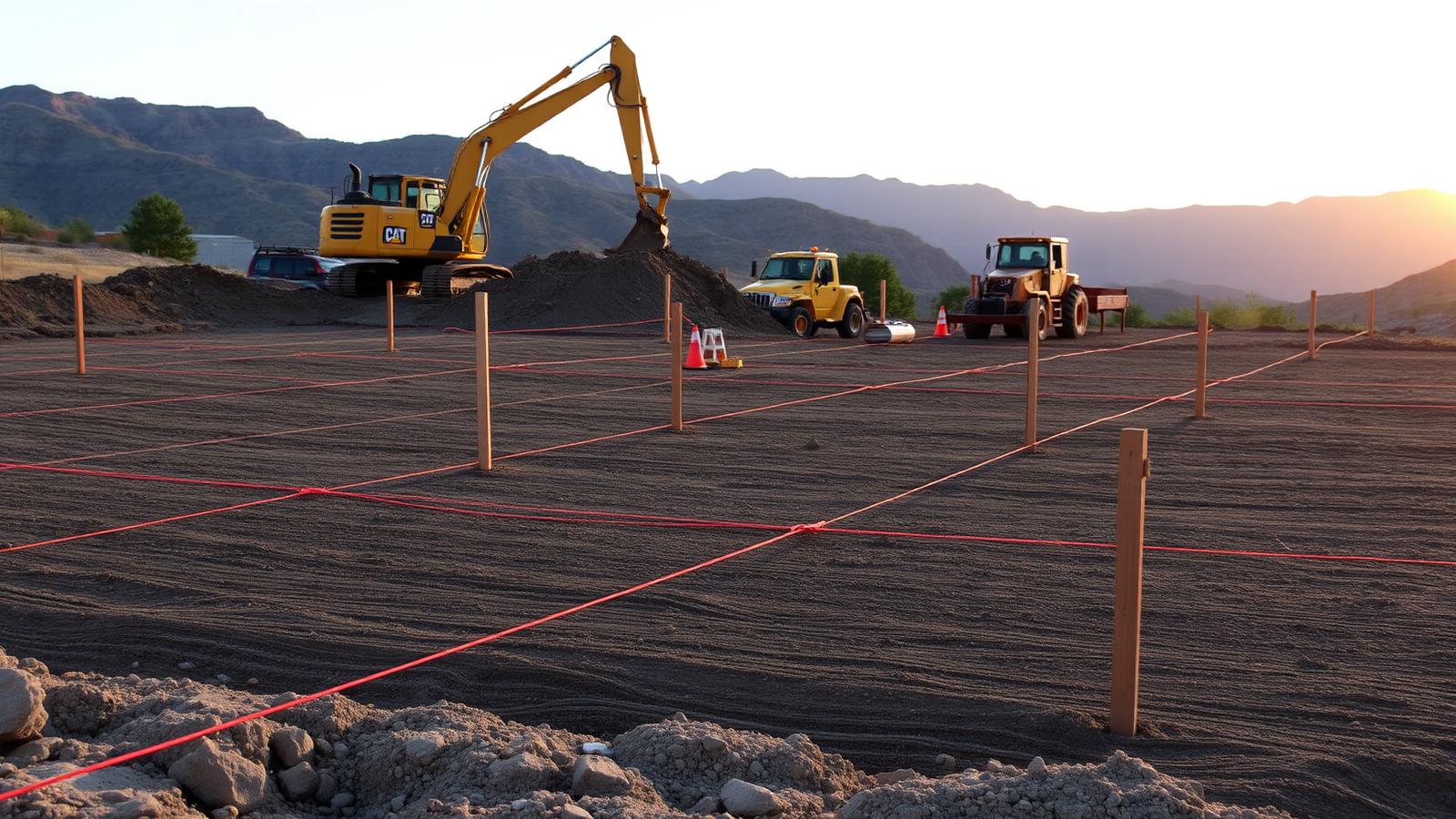
The sequence that works up here
- Survey and stake. Property corners, setbacks, building corners, existing utilities, protected trees.
- Blue Stakes and private utility locate. Do both. Private locates are what catch the unmapped lines.
- Erosion control and access. Silt fence, inlet protection, tracking pad, construction fence.
- Clear and grub. Strip topsoil to a designated stockpile, you will need it for revegetation and bond release.
- Mass excavation and cut/fill balance. Move it once. Stockpile reusable structural fill where it will not be in the way.
- Deep utilities. Sewer first, it is gravity and it sets the elevations everything else works around. Then water, then dry utilities.
- Building pad and overexcavation. Bring to grade in lifts, compact, and get density tests before anyone forms.
- Footings and foundation excavation to plan and to the inspector's tolerance.
- Backfill and compaction around the foundation once the concrete has cured and, where required, the structure is braced.
- Driveway and access base after the trades that need to trench have finished.
- Final grade, drainage confirmation, topsoil respread, seeding.
- Final inspection, then bond release once revegetation takes.
The mountain variables that reorder everything
At 6,500 to 8,000 feet the ground freezes and the calendar shrinks. You do not want to be compacting structural fill in frozen conditions, and you do not want to hydroseed into snow. That means the whole sequence should be planned backward from the seeding window and the frost line, not forward from the notice to proceed.
Spring runoff is the other one. A trench that would be routine in September can be a dewatering operation in May. On steep lots, snowmelt will find whatever drainage path you left it, which is why the drainage plan needs to be executed as you go rather than dressed in at the end.
Scope clarity before the first day
The most useful hour on any project is the one where the GC and the excavator walk the site with the plan and agree on exactly where the scope line sits. Who is doing the overexcavation. Who owns the export and where it goes. Who is trenching for dry utilities. Who is setting the culvert. Who dresses the final grade after the landscaper's material arrives.
Every surprise on a project is a scope question that never got asked out loud. We ask them at the start, in plain language, so the number you get is the number you pay and the sequence holds.
Want this handled instead of managed?
We do this work every week in Park City and 25 miles around. Call and we’ll tell you straight what your site needs.